Writing style
Writing clinical texts for professionals and non-professionals is not an easy task. Fortunately, we have different channels to communicate with each.
However, we have some basic rules that have to be applied everywhere in order to make us understandable, coherent and to avoid inconsistencies.
US English
We use US English spelling, so -ize not -ise, color not colour, etc.
Appropriate vocabulary
Make sure you are using the correct vocabulary and words so every target can easily understand the message.


The less the better
Make sure your writing is clear and consistent. Avoid being redundant; if you can explain something in a few words don’t add more. We know that people don’t want to read too much, especially in digital interfaces where they want to interact quickly.

Abbreviations and comprehension
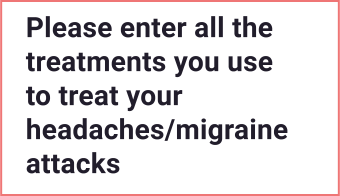
As a rule, don’t use abbreviations in customer-facing copy. Not all our audience can understand our technical or non-technical acronyms, and sometimes differing definitions make it even more difficult. Try to unify the corporate language at every opportunity.
If you think it is better to use the acronym because the name is too long and/or needs repeating several times in the same text, please make sure to explain its meaning in advance.




Gender use
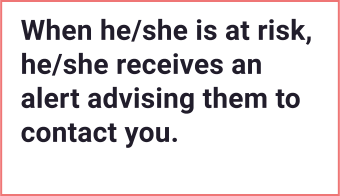
Where possible, avoid gender pronouns (“he” or “she”). When impossible, opt instead for “patient”, “user”, “they” or “their”. You can also get round it by using the passive voice:

Information hierarchy
It’s very important to help people understand what we want to explain in a few seconds. Follow a consistent text hierarchy using titles, subtitles, body copy, footnotes…
Follow the design templates provided by the design team and the rules that are already implemented in similar applications. If you need help, don’t hesitate to ask the design team.


Title rules
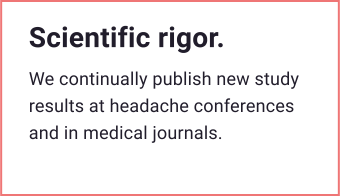
Only capitalize the first letter of the first word and any proper names in titles.


Never use full stops at the end of titles (except if the title has 2 or more sentences, in which case apply to all).

Capitalization in texts
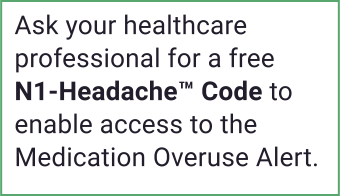
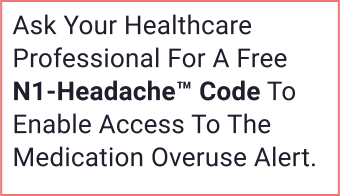
For all texts, keep only the first word of each sentence and the product names capitalized.
Highlighting relevant text
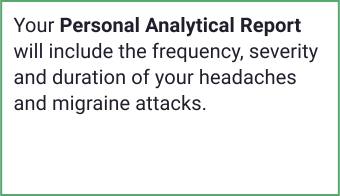
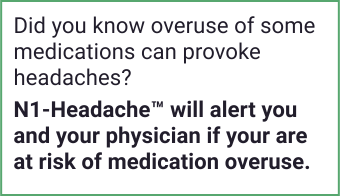
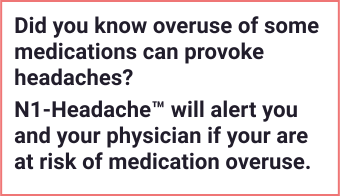
If you want to draw attention to specific parts of the text, use other options within the same Roboto family font.
Corporate font use
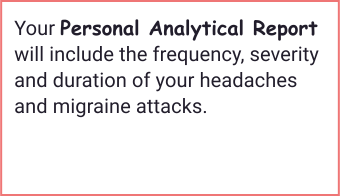
Roboto is the corporate font family and all texts must adopt this typography. Don’t use any font styles other than Roboto.